

Gum Disease Treatment Lakewood
Targeted Treatment to Improve Gum Health
We keep a close eye on our patients’ gums whenever they come to see us for preventive dental checkups. If you are dealing with gum disease, we can provide several targeted therapies in addition to working closely with a periodontist (gum specialist) close to your home or here in our dental office! Thanks to this coordinated effort, we can make sure your smile (not just your teeth) stays healthy and complete for years to come. If you’re experiencing the early signs of gum disease that we touched on above, contact us today and learn how we can help with gum disease treatment in Lakewood!
Why Choose Lakewood Complete Dentistry for Gum Disease Treatment?
- Treatment Helps Prevent the #1 Cause of Adult Tooth Loss
- Protects Your Smile & Oral & Overall Health
- On-Staff Periodontist for In-House Specialized Care
What is Gum Disease?

Gum disease is a common bacterial infection that can impact the gums, roots of the teeth, and the bone that supports the teeth. There are two different stages of this dental problem: the earliest is gingivitis, and the advanced stage is periodontitis. Our team’s priority is to spot the signs of disease as early as possible to prevent it from spreading and causing permanent damage to your teeth and gums.
Symptoms of Gum Disease

Depending on the stage of gum disease that you have, you may experience a wide range of symptoms. Gingivitis typically causes the following symptoms:
- Chronic bad breath
- Bleeding while brushing or flossing
- Swollen, red gums
- Tender gums
Periodontitis is the more advanced stage of gum disease. It can cause a number of consequential oral health problems and symptoms, including:
- Gums that are tender to the touch
- Gums that appear deep purple or dark red in color
- Pus between the teeth and gums
- Pain or discomfort while chewing
- Loose teeth or tooth loss
- Small black triangles that develop between the teeth (gum recession)
- A change in the way the teeth fit together
Once gum disease has advanced, the infection may not be reversible. However, our team can help ease your symptoms and prevent further harm from coming to your smile.
How Do We Treat Gum Disease?

Our team will examine your mouth for signs of gum disease at each of your checkups and cleanings. Depending on the symptoms we see and that you’re experiencing, we may recommend one or multiple of the following treatment options to improve the health of your smile:
Scaling & Root Planing
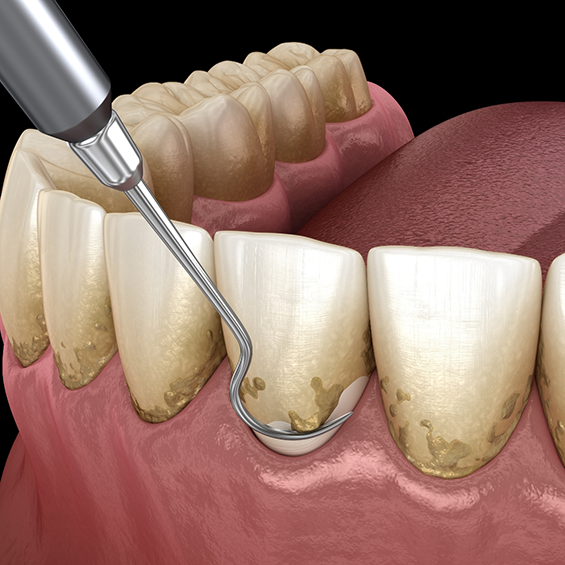
For mild to moderate cases of gum disease, we can reduce the infection by using a set of treatments called scaling and root planing. This can be thought of as a dental cleaning that is specifically focused on the gums and roots of the teeth. First, a member of our team will remove any plaque and tartar deposits located along the gumline (scaling), and then, the roots of the teeth will be gently smoothed out (root planing). This lowers the risk of plaque and bacteria gathering around the gums in the future, helping to keep our patients protected from reinfection.
Do You Need Scaling & Root Planing?

Our dentists’ top priority is to make sure your oral health stays on the right track, which is why our team screens for gum disease at each of your routine checkups and cleanings with us. If we find any signs of gum disease, we may recommend a deep cleaning, also known as scaling and root planing. Some of the signs that we keep an eye out for include:
- Gums that bleed whenever you brush or floss
- Gum recession that makes your teeth appear longer than they actually are
- A change in bite
- Chronic bad breath, also called halitosis
- Swollen, red, and puffy gums
- Gums that feel tender
- Dental sensitivity
If you notice any of these symptoms, give our team a call to schedule an examination as soon as possible.
The Process of Scaling & Root Planing
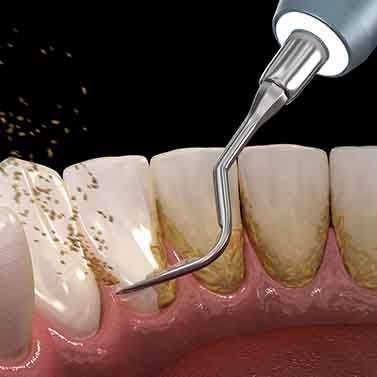
Scaling and root planing, better known as a deep cleaning, is usually our second line of defense against signs of gum disease, right after improving at-home oral hygiene routines. This service typically takes place over the course of two appointments, with the first being a thorough cleaning as far down as the pockets of the gums. This will remove any plaque and tartar build-up, which harbor infection-causing bacteria from the area.
The second appointment will be the root planing procedure, which involves our team clearing away all hardened deposits of bacteria on the roots of the teeth. We aim to help the gums healthily reattach to the teeth, protecting the vulnerable underlying structures from further decay, and even tooth loss.
Aftercare Tips for Scaling & Root Planing

After a deep cleaning in Lakewood, it’s likely that your mouth will feel sore, and even a little swollen. You may also experience collateral numbness from the local anesthesia we administered before your treatment for up to 12 hours after. It’s important to keep your mouth clean as you recover, rinsing with salt water every few hours to cleanse the mouth and alleviate discomfort. Continue brushing your teeth twice a day for two minutes, flossing, and rinsing your mouth as well to keep plaque from building up again.
Antibiotic Treatment

Our team may recommend antibiotic treatment in conjunction with a deep cleaning. We pack the pockets of the gums with small Arestin microspheres that will gradually release medication over a two-week period of time to consistently battle bacteria and prevent advancing infection.
Laser Periodontal Treatment
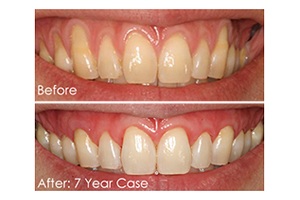
We value using the latest technology to make your experience as comfortable as possible and ensure that your procedure yields ideal results. During your scaling and root planing treatment, we will likely use our dental laser to help rehabilitate your gums and kill harmful oral bacteria. The laser itself is able to dramatically reduce bacteria as well as precisely remove severely damaged gum tissue to preserve your smile. Although a laser may sound high-tech and intimidating, this piece of technology dramatically reduces recovery time and uncomfortable post-operative side-effects like bleeding!